Vital records, comprising birth, marriage, and death certificates, serve as some of the highest-quality sources of evidence for family history researchers by providing essential dates and locations, identifying the names of individuals and their immediate family members, and offering specific event details such as the cause of death, time of birth, or the individual who officiated a wedding.
Beyond the details listed, there may be additional information you can glean when you read between the lines.
Key takeaways on vital records
- Reliable primary evidence: Vital records are high-quality primary sources recorded near the event. However, researchers must remain skeptical as human error, memory lapses, or intentional misrepresentations can occur during filing.
- Evolving governmental utility: Historically used to enumerate populations, these records became essential in the 20th century for regulating public health policy, confirming identities, and determining eligibility for various social benefits.
- Privacy and accessibility: Access to birth, marriage, and death records varies significantly by jurisdiction; many regions impose privacy embargoes ranging from 50 to 125 years before documents become public.
- Analytical research depth: Beyond basic dates, analyzing marginal notes, informant identities, and late registrations can reveal complex family narratives, including migrations or adoptions, which often lead to further genealogical discoveries.
Vital records are considered primary sources: documents of the highest degree of reliability because they are usually recorded shortly after the event in question and by people who witnessed it firsthand. However, even primary sources, vital records included, should be approached with a healthy dose of skepticism. After all, the records were made by human beings, who may have misheard, misremembered, or even purposely misrepresented the information.
Why do vital records exist?
In an article titled History of the birth certificate: from inception to the future of electronic data (Brumberg et al, 2012, Journal of Perinatology), the researchers write that enumerations of populations were carried out even in ancient times, and that information about births were recorded in church registers in England as early as the 16th century. In the United States, it was only in the beginning of the 20th century that a permanent agency was established to regulate birth registration.
Why did it become important to governments to keep track of births, deaths, and marriages among their citizens at that time?
The paper mentioned above discusses the importance of keeping birth records to inform public health policy. In the early 20th century, governments also began to offer more organized services and benefits to citizens, and vital records help make those possible by:
- Confirming identities
- Confirming age, for purposes of schooling, marriage licensing, military service, social security, voting, jury service, eligibility for public office, etc.
- Verifying that a couple is eligible to wed in terms of age, parental consent, marriage status, and family relationship (to ensure they’re not closely related)
- Verifying eligibility of family members for benefits and inheritance
Now that we know why these records exist, let’s take a closer look at each type of record.
Birth records
What is a record of birth?
A birth record or birth certificate documents the live birth of a person. These records are usually issued within a few days of the birth and submitted by one of the baby’s parents. They usually include:
- The child’s name
- The parents’ names
- The date and time of the birth
- The location of the birth
They may also contain additional details about the parents, such as where and when the parents were born, the number and/or ages of additional children, and religious affiliation.
Note that many hospitals issue a decorative birth certificate containing the baby’s name, weight, date and time of birth, and sometimes the baby’s footprints and/or handprints. These are decorative keepsakes and not official government records, but they can still be useful for genealogists.
How to find birth records
MyHeritage offers access to more than 1.4 billion birth records, ranging from high-resolution scans of original documents to detailed indexes that provide the necessary information to contact local archives for a copy. When searching for birth records, you can optimize your results by filtering them according to collection, region, or time period, or including names of parents to help narrow down the correct family household.
Finding the record is just the beginning of the discovery process. Understanding what to look for in birth records can help you uncover a wealth of information that goes beyond basic names and dates. Subtle clues like marginal notes, the identity of the informant, or late registration dates can reveal significant life events such as adoptions, name changes, or family migrations. By analyzing these hidden details, you can turn a single primary source into a rich narrative and find new leads to follow in census or marriage records.
Are birth certificates public records?
Whether birth certificates are public records depends on the location and how long has passed since the birth occurred. For example, in the state of Arizona, birth certificates become public records 75 years after they are issued. In Alabama, you have to wait 125 years for a birth record to become public.
Example of a historical birth certificate
The birth certificate below, from the Arizona Birth Certificates, 1887–1935 collection on MyHeritage, documents the birth of Willis Lyle Shunway on April 15, 1920 in the county of Navajo, Arizona.
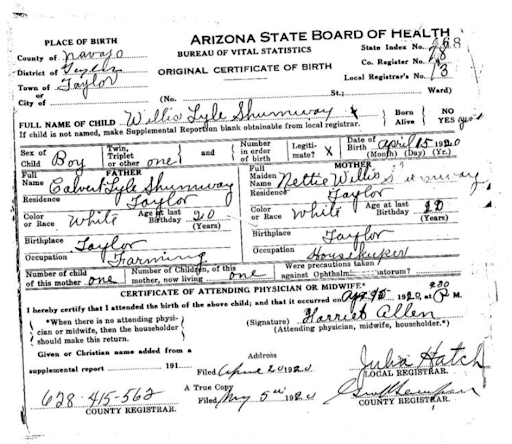
It tells us whether the birth was a live birth, the baby’s sex, whether the pregnancy was for a singleton or multiples, whether the child was “legitimate” (a.k.a. born within wedlock), and the date and time of the birth. It also lists both parents’ names, ages, places of birth, and occupations as well as their race, and the name of the attending physician or midwife. You can see that the certificate was filed on April 20, 5 days after the birth.
Death records
What are death records?
Death certificates are typically issued within days of a person’s death, based on information given by a family member, medical professional, or other person who witnessed the death. They usually include:
- The person’s name
- Date of birth
- Place of birth
- Age at death
- Names and birthplaces of the deceased person’s parents
- Cause of death
- Name of the informant
The death certificate may also list the name of the funeral home, which can often provide additional records. The name of the person who reported the death may help you gather more clues around the circumstances of the death or locate additional relatives.
How to find death records
MyHeritage provides access to more than 1.5 billion death records, including death certificates, burial records, obituaries, and more. As with birth records above, some of these collections contain high-resolution scans of the original document, while others are indexes that tell you the exact location of the original document so you can order a copy. When searching for death records, you can optimize your search by filtering per collection, location, or time period, or adding the name of a family member.
Locating the document is only the first step in understanding the end of an ancestor’s life. Knowing what to look for in death records, such as the length of an illness, the name of the funeral home, or the specific birthplace of the parents, can provide vital clues that lead to earlier generations. These details often serve as a bridge to other record types, like cemetery records or newspaper obituaries, helping you build a more complete picture of your family history.
Are death certificates public records?
Like with birth records above, death certificates are not public record by default. In some places, such as the state of California, they are public, while others become public record after a certain amount of time (for example, 50 years after the death in Alaska), and still others are only available for family members or other individuals with a direct interest.
Example of a historical death record
The death certificate below, from the Missouri Death Certificates, 1910–1960 collection on MyHeritage, is for John Wunch, who passed away on September 16, 1920.
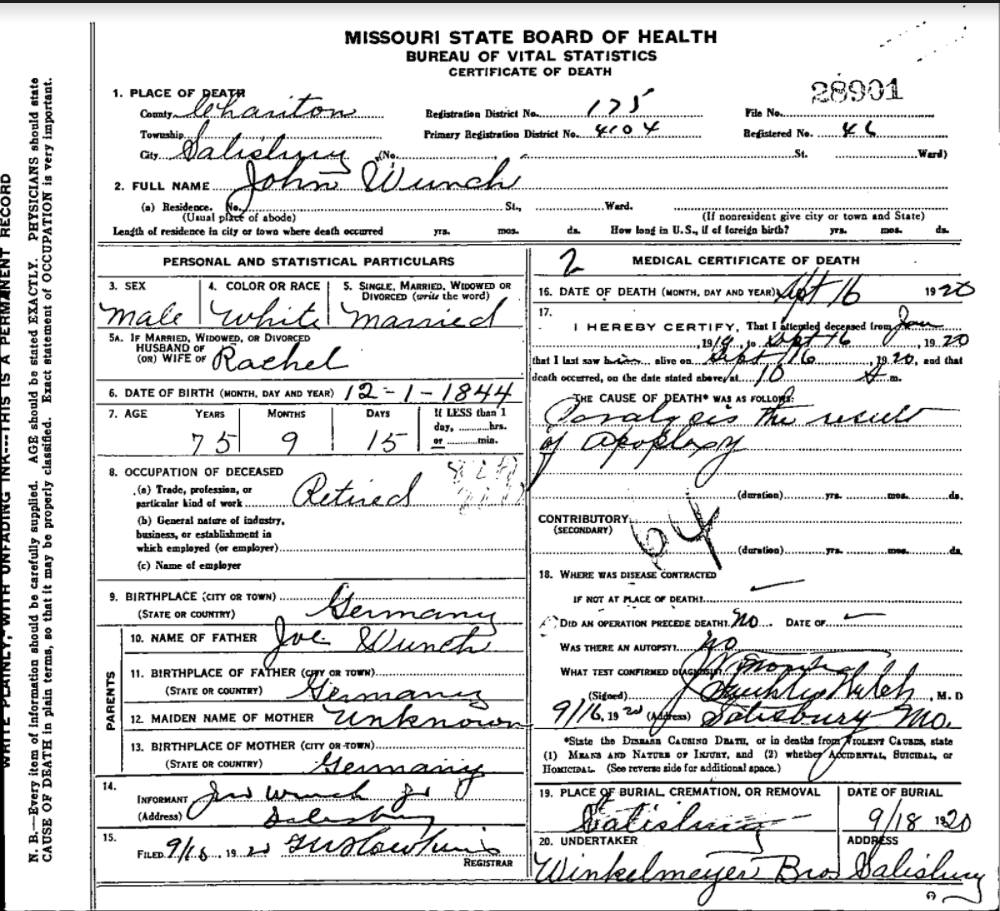
It lists his name, sex, color or race, marital status, occupation, birthplace, and the names and birthplaces of his parents (though his mother’s name is listed as “unknown”). The name of the informant is John Wunch Jr., who was likely his son. The place, date, and cause of his death are also noted, as is his place and date of burial.
Marriage records
What are marriage records?
Marriage records document the marriage of a given couple and are usually issued the day of the marriage. They generally contain the names of the bride and groom, their ages, and places of birth or residence. They might also mention information on the parents of the bride and groom. Divorce documents are also usually included in this category.
Like with birth certificates, there may be documentation issued separately from the official civil records, such as a decorative keepsake certificate or a religious marriage or divorce document. These can also be valuable from a genealogy perspective, but are usually kept within the family and not as official records.
How to find marriage records
MyHeritage offers a robust database of almost a billion marriage and divorce records, often featuring high-resolution scans of original certificates. When searching for marriage records, you can refine your search by adding details such as the spouse’s name or the specific year of the event to filter through extensive international collections. This approach helps you quickly identify the correct couple, even when dealing with common surnames.
Once you have located a record, it is essential to look beyond the basic names and dates. Knowing what to look for in marriage records, such as the names of witnesses, the occupation of the groom, or the residences of the parties, can provide critical clues about family connections and social standing. These details often lead to further discoveries in census records or help verify parentage.
Are marriage records public?
Like birth and death records, marriage records are not public by default, and different regions handle them differently. In the state of New York, for example, marriage certificates that are more than 50 years old are public, while in Illinois, they are only available to the people mentioned in the records, their legal representatives, or people who have been authorized to view them by court order.
Example of a historical marriage record
The image below is from MyHeritage’s Greece, Sparta Marriages 1835–1935 collection.
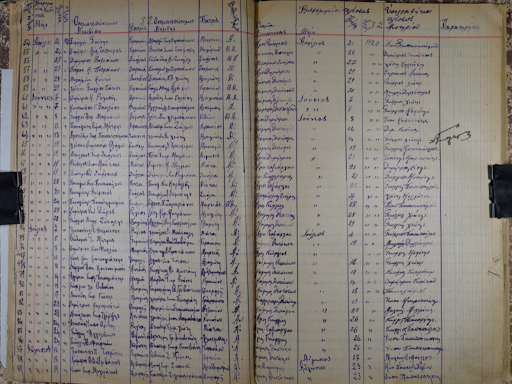
As you can see, this is not a marriage certificate, but rather a book that records the names of the bride and groom, the date of their marriage license, their places of birth, their fathers’ names, and the church where they were married.
Looking beyond the record
While the basic details these records contain are valuable on their own, you may be able to learn more by digging deeper and asking yourself the following questions:
- Who is the informant? Who filled out this report and why?
- Did that person hear it firsthand, or from someone else?
- Is there a reason they might have misremembered details, or maybe even lied about some of them?
- How long after the event was this record made?
- Is there writing in different hands or different ink? If so, was it filled out by different people, or by the same person at different times — and why?
- What was left blank or listed as “unknown,” and why?
- Did the event take place near the residences of the people involved? If not, why might they have traveled to this place?
- What consistencies and inconsistencies can you find within the record and in comparing it to others?
Learning more about the historical context and how these types of records were taken in that time and place can also help you understand more about the document.
Alternatives to vital records
If you can’t find birth, marriage, or death records for the ancestors you’re seeking, you might still be able to find important information about these events of their lives in other historical records, such as:
When you use the MyHeritage search engine, you don’t need to know exactly what type of record you’re looking for. Simply enter the details you know, and MyHeritage will find records of any type that mention your ancestor. Click here to learn more about how to use the MyHeritage search engine.
FAQs on vital records
What are vital records and why are they important?
Vital records are official documents — specifically birth, marriage, and death certificates — that record significant life events. They are essential for genealogists because they serve as primary sources, providing verified names, dates, and family relationships recorded shortly after an event occurred by firsthand witnesses or officials.
How can I find birth, marriage, or death records for my ancestors?
You can search extensive digital databases like MyHeritage, which hosts billions of birth, marriage, and death records. If digital copies are unavailable, these indexes often provide the necessary details to contact local archives or government agencies directly to request physical copies or high-resolution scans.
Are all vital records available to the public?
Accessibility depends on local laws and the time elapsed since the event. For instance, birth certificates might remain private for 75 to 125 years, while death records may become public sooner. Some jurisdictions restrict access entirely to immediate family members or legal representatives.
Why might information in a vital record be inaccurate?
While vital records are highly reliable, they are created by humans who may make mistakes. Informants might misremember dates, misspell names, or intentionally provide false information. Always approach these documents with healthy skepticism and cross-reference them with other historical sources to ensure accuracy.
What should I look for beyond names and dates?
Analyze “hidden” details like the identity of the informant, marginal notes, or the specific cause of death. These clues can reveal adoptions, name changes, family migrations, or social standing. Comparing handwriting or noticing which fields were left as “unknown” can also provide deeper context.