
Did you know that 26 million people worldwide have taken a DNA test? Thanks to being much more affordable and accessible than ever, many are turning to DNA testing for answers to life’s big questions. This is great news for genealogy enthusiasts, as it offers a wealth of family-tree-building insight.
Unlike documents like census records, which tell you what people did on a specific date, DNA captures the who behind the lineage, showing connections that might have gone undocumented and out of reach of regular genealogy searches.
In this article, we look at what DNA testing is, what it offers anyone engaging in DIY genealogy and how to go about incorporating it in your approach.
Key takeaways on using DNA in family history research
- DNA testing helps you confirm whether the family lines you’ve traced on paper actually represent what happened.
- It can reveal relatives you didn’t know existed, from close matches to distant branches.
- Shared DNA segments help you work out how two people might be connected when records are thin.
- Testing can clarify uncertain parentage or resolve long-standing gaps in a family line.
- Combining DNA results with your existing tree gives you a clearer, more reliable picture of your ancestry.
How does DNA testing work and what can it do for your family tree?
DNA testing works by comparing your results with millions of others in the database, and when parts of your DNA line up with someone else’s, it suggests you share a relative somewhere in the past. Those overlaps help you see which side of the family a match belongs to, and how close the connection might be.
When you place these results alongside what you find in places like church records and birth records, you could find something you’d previously missed.
DNA testing can be a powerful tool for your family tree, adding evidence, direction, and sometimes surprising new branches to explore. Here’s how it helps, in practical terms:
- It compares your DNA with everyone in the database: Your results are checked against others who share a noticeable amount of DNA with you, and these people appear as potential relatives. This is how completely unknown branches of your tree can suddenly come into view.
- It groups your matches into useful clusters: Many testing platforms organize your DNA matches into groups based on what you all share. Each cluster usually points to the same part of your tree, making it easier to see which family line to investigate first.
- It helps you test whether your paper research holds up: If you believe two people in your tree are connected, DNA can help confirm whether your documented research is accurate or needs a second look.
- It brings hidden gaps to the surface: Sometimes a cluster of matches appears with no obvious place in your tree. That’s a strong hint that something is missing — perhaps a branch you haven’t researched yet or an event not recorded in your documents.
- It gives you clues about deeper origins: Ethnicity estimates aren’t exact, but they do highlight long-established regions your family may be linked to. These hints can point you toward specific countries, counties, or communities to investigate next.
How to use your DNA results in family history research
DNA on its own won’t build the tree for you. It’s best used to confirm what you’ve already found on your family tree-building journey. So, here are some clear steps on how to turn a list of matches into something you can actually use.
Step #1: Start with your closest matches
Look at the people with whom you share the most DNA first. Why? Because these people are most likely to fit into a branch you already recognize, and confirming those links gives you a solid base to work from.
Step #2: Check where each match sits in the ‘cluster list’
DNA matches often fall into clear maternal or paternal groups known as ‘cluster lists’ and once you know which side a match belongs to, it’s easier to see how they might connect to the people you already have in your tree.
Step #3: Compare their details with what you already know
When a surname, birthplace or age range lines up with someone already in your tree, it gives you a starting point for where they might fit.
If something doesn’t match up, keep the person on your radar, but treat them as a clue rather than a confirmed connection. At this stage, you’re simply seeing whether their details support any of the directions you’re already exploring.
Step #4: Look for matches shared between you and someone you trust in the tree
Shared DNA matches often point to specific ancestors in your family tree, and when you’re confident in those people’s details, it strongly suggests whose side of the family they’re from. It’s one of the quickest ways to narrow down which branch a group of people are linked to.
Step #5: Only add new branches when you’re confident where they fit in
Once you’ve got enough overlapping clues, e.g. surnames, locations, shared matches or clear cluster patterns, you can add the new connection to your tree. However, don’t force things where they don’t fit. Just leave a note and come back once more evidence appears.
Start using DNA to strengthen your family history research
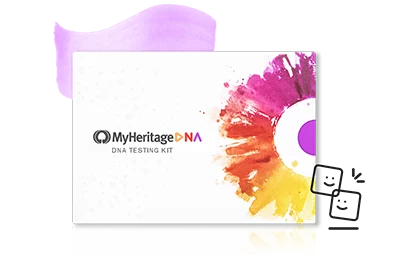
MyHeritage DNA testing helps you open doors that paper records often can’t get to, and there’s never been a better time to find out more about your family history in this way. Our customers can currently get their DNA tested for a reduced price.
If you’re ready to advance your genealogy research, get your DNA analyzed today, it could reveal relatives or confirm long-suspected connections, and fill in that annoying gap you’ve been trying to solve for years.
Don’t forget that MyHeritage is also home to billions of genealogy records and a suite of tools that you can use to build your tree. Millions of users rely on MyHeritage for genealogy research, historical records, and DNA tools, and you can too!
FAQs about using DNA in family history research
Do I need to test other family members to make sense of my results?
Not always, no. Your own test can reveal plenty on its own, but testing a parent or sibling can help you separate branches and spot connections that might otherwise be harder to place.
What if a DNA match doesn’t share a surname with anyone in my tree?
That’s completely normal. Surnames change through marriage, adoption, spelling shifts or simple transcription errors. Treat it as a clue rather than a mismatch.
Can DNA results help with ancestors who lived before civil records began?
Yes. While you won’t get names, clusters and shared matches can point you toward the right regions, families or local communities to start searching.
Should I delete matches that seem too distant to be useful?
No. Distant matches often link several generations back, and they can become helpful once you’ve built out more of your tree. Keep them there for later comparison.
What if two close matches fit different parts of my tree?
That usually means you’re seeing both sides of your family. One may sit on a maternal branch and the other on a paternal one. Cluster patterns will show you which is which.